Development Entrepreneurs

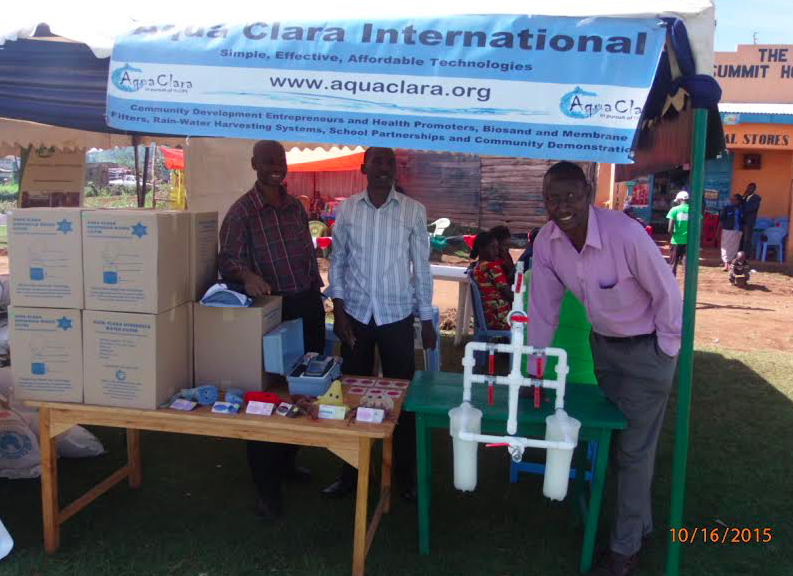
ACI works by training a network of local Community Development Entrepreneurs (CDEs) in the manufacture, promotion, installation and sale of the ACI water filters and safe water storage containers. Currently, there are 28 de-centralized CDEs each working from a rural school as their base of operation in their own rural community.

ACI supplies the tools and materials for the construction of an entrepreneur's first 25-50 water filters.  The material cost of an ACI water filter in Kenya is around $10 (820KES) and as the filters are sold, the CDE pays this amount back into a material re-supply account so that the money is in place to supply the next set of filters.  This model is also known as micro-consignment.  Each entrepreneur makes a small profit (250KSH – around 3 USD) from the sale of each water filter – this helps to improve their livelihood, while also helping to serve the water treatment needs of their local community in a sustainable and demand driven way.

Affordable safe water storage and distribution containers have been added to the product range that is available for sale from the CDEs.  These containers, along with relevant training on proper cleaning techniques, help to reduce some of the problems with re-contamination of treated water.  The CDEs meet with ACI staff once per month to hand in their sales receipts from the previous month and to take part in further training on a range of topics that will help them run their small enterprise effectively e.g. social marketing; sand preparation; end user training etc.

The CDEs are selected in partnership with the local community.  If a school is successful in its application to be part of the ACI program, the next step is the selection of the CDE and Community Health Promoter (CHP) based on job descriptions provided by ACI.  The school administration, parent-teacher association and local chief nominate 3 people to go forward for interview for the position.  ACI staff then interview the candidates and make the final selection.  It is important to note that the CDEs are not paid by ACI – they run their own small business and their success is based upon their personal effort and motivation as well as local demand.  ACI also has a system of rewards and penalties to encourage high standards.  The ACI Community Development Entrepreneurs are male and female and are generally deriving their main income from small scale rural farming.


This network of Community Development Entrepreneurs one of the things that makes the ACI model so unique.  One of the goals of ACI in Kenya is to continue to expand the range of WASH related products that can be sold through this established network.  Rainwater harvesting, ecological sanitation systems and alternative water treatment systems are all on the horizon.  ACI will strive to keep the costs low, the quality high and the expertise local in all of these endeavors.